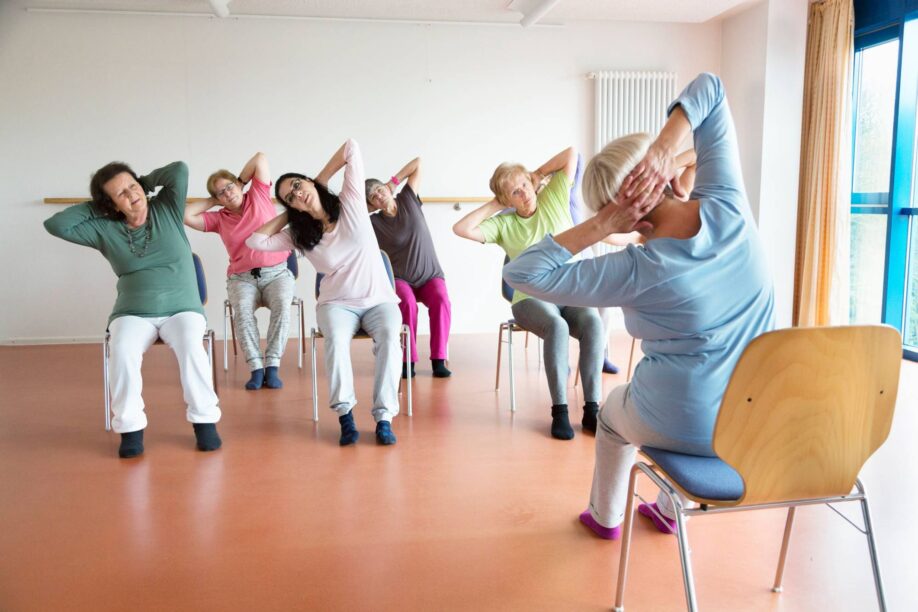
This gentle practice is ideal for people of all flexibility and mobility levels
If you’ve ever wanted to try yoga but felt uncertain about getting up and down from the floor, chair yoga might be the perfect solution. Using a sturdy chair for support, this gentle practice adapts classic yoga poses so that anyone — regardless of age, flexibility or mobility level — can participate and reap the benefits. Whether you’re looking for a safe way to ease joint pain, increase flexibility, improve your mood or simply add movement to your day, chair yoga offers an accessible way — no experience required.
From the now closed NextAvenue:
Chair Yoga 101: How To Start at Any Age
This gentle practice is ideal for people of all flexibility and mobility levels
If you’ve ever wanted to try yoga but felt uncertain about getting up and down from the floor, chair yoga might be the perfect solution. Using a sturdy chair for support, this gentle practice adapts classic yoga poses so that anyone — regardless of age, flexibility or mobility level — can participate and reap the benefits. Whether you’re looking for a safe way to ease joint pain, increase flexibility, improve your mood or simply add movement to your day, chair yoga offers an accessible way — no experience required.
As a registered nurse, I have seen many injuries in the emergency room caused by falls related to decreased balance and flexibility. For individuals with reduced mobility, strength and balance, exercising can be especially challenging, particularly for those who rely on a walker or cane for support. Chair yoga is a safe and effective way to improve mobility, strength and balance from the comfort of your own home.
What is Chair Yoga, and What Are the Benefits?
Chair Yoga is a yoga exercise that is performed while sitting in a chair. Every pose, meditation or breathing exercise is performed from a seated position, so there is no requirement to get down on the floor. Some movements may involve standing while using the chair for support, but every pose can easily be modified to remain seated if standing is not an option for you.
Benefits of Chair Yoga
Improved mobility: Regular practice helps maintain and increase joint range of motion, making daily activities easier.
Greater strength: Gentle resistance and weight-bearing moves help build muscle, essential for overall stability and function.
Enhanced balance: Practicing balance-focused poses safely from a chair can reduce the risk of falls and related injuries.
Reduced pain and stiffness: Stretching and mindful movement may decrease stiffness and discomfort, particularly for people with arthritis or chronic pain.
Better posture: Chair yoga encourages mindful alignment, which supports spinal health and overall comfort.
Stress relief and improved mood: The meditative and breathing components can help manage stress, ease anxiety and boost emotional well-being.
According to an article from Harvard Health Publishing, chair yoga offers several important benefits supported by recent studies:
“In one small study among older adults with osteoarthritis in the lower body (for example, knees and hips), doing chair yoga exercises for 45 minutes twice a week for eight weeks led to less pain and fatigue, compared to participating in a health education program. Another small study found that adults with knee osteoarthritis were better able to carry out their daily activities after a 12-week chair yoga program. In a third study, older adults experienced greater stress reduction after participating in a six-week chair yoga program, compared to those who participated in six weeks of chair aerobics, walking or social games.”
One of her students, in her upper 80s, told Morrison she hasn’t needed pain medication for her shoulder since starting chair yoga about a year ago.
How to Get Started
Sharla Morrison, a 200-hour certified yoga instructor, is passionate about helping others experience the transformative power of yoga. In addition to teaching traditional classes at her studio, she introduced chair yoga — following extra training and at the request of a local physician — to serve the community’s needs. Watching her students grow stronger and more confident over time has been, for her, a powerful reminder of yoga’s benefits.
One of her students, in her upper 80s, told Morrison she hasn’t needed pain medication for her shoulder since starting chair yoga about a year ago. Another student, who once had to brace her back to stand, has since gained the strength and flexibility to bend over, retrieve items and stand back up with ease.
Many of her students come on the recommendation of their physical therapist to continue progress through chair yoga, often noting how closely the exercises resemble those done in therapy. For Morrison, these stories are more than just improvements — they are heartfelt testimonials to yoga’s lasting impact.
Advertisement
For those new to chair yoga, Morrison recommends checking with your doctor first to ensure this is a suitable option. Once you’re ready to begin, make sure your chair is safe and sturdy — it shouldn’t tip, wobble, roll or move easily — and choose one without arms to allow for a fuller range of movement. She encourages beginners to listen to their bodies, remembering that the goal is to stretch, not cause pain. The intensity is always in your control, so go only as far as feels comfortable and never push beyond your limits.
The intensity is always in your control, so go only as far as feels comfortable and never push beyond your limits.
If possible, consider joining a local chair yoga class, where the social interaction not only enhances motivation but also supports mental health by fostering a welcoming sense of community.
If attending an in-person class isn’t an option, you can practice chair yoga at home and may even find one-on-one instruction from a yoga teacher, if available. Many free chair yoga videos are also accessible on YouTube, along with other types of yoga you might consider if they suit your needs.
Chair Exercise Options
As an alternative, Maddie Wimberley, a certified personal trainer (CPT), offers the following recommendations and chair exercise routine:
“As we age, maintaining strength and flexibility becomes essential for reducing joint pain, preventing falls and staying independent. Strength training doesn’t need to involve heavy weights; it can be as simple as low-impact chair-based exercises with a resistance band or ankle weights. When combined with stretching or practices like chair yoga, these strengthening movements help improve posture, balance and overall quality of life,” says Wimberley.
“Simple daily movement can truly make a difference and prolong our independence as we get older – and it’s never too late to start.”
“For menopausal and postmenopausal women, strength training plays a key role in maintaining bone density, supporting metabolism and reducing the risk of osteoporosis. During this stage of life, women are more prone to muscle loss, weight gain and decreased bone density. Consistently incorporating regular movement and strength training, even in the form of simple chair or other low-impact exercises, can help women stay strong, energized and more in control of their health.”
She adds, “One thing I always tell my older patients and clients is, ‘A body in motion stays in motion,’ and I firmly believe it! Simple daily movement can truly make a difference and prolong our independence as we get older – and it’s never too late to start.”
Chair Exercise Routine for Full Body Workout
Perform each exercise for 3 sets of 8-12 repetitions. Equipment needed: light dumbbells, water bottles, soup cans or resistance bands. Be sure to check with your doctor before beginning any new exercise routine.
Sit-to-stand: For this exercise, sit at the edge of the chair, feet hip-width apart. Stand up without using your hands, then slowly sit back down. Use hands lightly on the chair or use a walker or cane if needed for support.
Seated marches: Sit tall and alternate lifting one knee at a time toward your chest.
Seated bicep curls: With elbows tucked in, curl weights towards shoulders, then lower with control.
Seated overhead press: Press weights overhead from shoulder height, then slowly lower.
Seated leg extensions: Extend one leg straight out and hold for 2-3 seconds, then lower and repeat.
Heel raises: Lift heels off the floor, pause, and lower back down.
I had the privilege of attending a chair yoga class led by Sharla Morrison and appreciated the personal instruction and warm social connection among her students. The simple yet highly effective movements left me feeling relaxed, peaceful and refreshed. Beyond the physical benefits, the sense of community in the class creates a supportive space where students encourage each other and share their progress.
Chair yoga offers more than exercise; it fosters connection and well-being. If you have the opportunity, I encourage you to try chair yoga and discover if it’s the right fit for you.

Melinda Dean, R.N., is a freelance health writer from Texas with over 26 years of combined experience in emergency health care as a licensed paramedic (L.P.) and registered nurse (R.N.). Passionate about educating both patients and the public, she covers a wide variety of health-related topics, including life issues beyond health care with insights into grief, resilience and personal growth. Drawing on her extensive nursing expertise, she strives to deliver relevant, engaging and inspiring content to her readers.