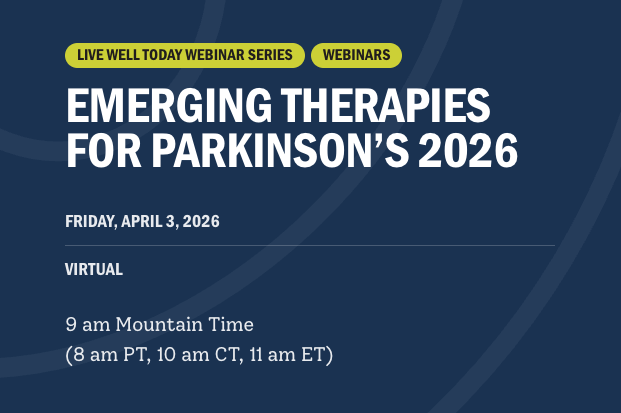
In early April 2026, the Davis Phinney Foundation’s (DPF) annual “Emerging Therapies for Parkinson’s” webinar featured Dr. Michael Okun, movement disorder neurologist at the University of Florida, and Dr. Soania Mathur, a retired family physician and person living with Parkinson’s. The webinar covered the latest PD research, trials, and advances in prevention, symptomatic treatment, and disease-modifying therapies. The speakers also addressed the challenge of evaluating claims circulating on social media. Read the notes prepared by our Stanford Parkinson’s Community Outreach team.
Here’s a brief summary of the emerging therapies the speakers highlighted:
Reducing environmental exposures matters both before and after diagnosis. Pesticides, contaminated water, and air pollution are established risk factors for Parkinson’s disease, and the case for addressing them does not end at diagnosis. Just as a lung cancer patient is told to stop smoking, a person already living with Parkinson’s has good reason to minimize ongoing exposure — there is evidence that continued exposure can worsen symptoms and accelerate progression.
Obstructive sleep apnea may be a modifiable risk factor for Parkinson’s disease. A large study of over 11 million veterans published in JAMA Neurology found that untreated obstructive sleep apnea was associated with up to twice the risk of later developing Parkinson’s. Treatment with a CPAP (Continuous Positive Airway Pressure) machine may reduce that risk and may also provide symptomatic benefit. This adds to the growing body of evidence that sleep quality is central to brain health in Parkinson’s.
Tavapadon is a once-daily dopamine agonist that works differently from existing options. Unlike traditional dopamine agonists that target D2/D3 receptors, tavapadon selectively targets D1/D5 receptors. Early clinical trials (TEMPO-1 and TEMPO-3) showed meaningful increases in “on” time with a reasonable safety profile. The drug is not yet FDA approved. Whether it will prove to have fewer impulse control side effects than existing dopamine agonists remains to be confirmed with real-world data.
Adaptive deep brain stimulation (DBS) is now commercially available but requires realistic expectations. Adaptive (or “closed-loop”) DBS records brain signals in real time and uses AI-driven algorithms to adjust stimulation accordingly. It has received regulatory approval and can benefit some patients, particularly those experiencing dyskinesias or motor fluctuations. However, it requires many programming visits, is not effective for everyone, and will not address symptoms like walking or speech difficulties that do not respond to dopamine. Existing DBS patients can potentially switch to an adaptive device by upgrading the implanted pulse generator.
Psychedelics such as psilocybin and ibogaine are generating early scientific interest as potential treatments for Parkinson’s non-motor symptoms. Both compounds work on serotonin pathways and appear to promote neuroplasticity — the rewiring of connections between neurons — and may also reduce neuroinflammation. Most research to date is in depression and PTSD, with only small early-stage studies in Parkinson’s. Results have been promising in some cases but are not yet robust. Supervised administration is required, and larger trials are needed before any conclusions can be drawn.
Three stem cell therapy approaches are advancing toward or into clinical trials. BlueRock Therapeutics (bemdaneprocel), Aspen Neuroscience (ANPD001/sasineprocel), and a Kyoto University team (Amchepry®) are each pursuing cell replacement strategies to restore dopamine-producing neurons. BlueRock uses donor embryonic stem cells and is in Phase 3; Aspen uses the patient’s own cells (no immunosuppression required) and is moving toward Phase 3; the Kyoto University approach uses donor-derived cells and is under conditional approval with ongoing data collection. None of these approaches will cure Parkinson’s, as Parkinson’s is more than a dopamine disease.
Gene therapy for Parkinson’s falls into three strategic categories: dopamine enhancement, circuit reprogramming, and neuroprotection. The first, dopamine enhancement, includes therapies that help the brain produce more dopamine to improve movement symptoms. The second, circuit reprogramming, includes therapies that work to correct the abnormal brain signaling patterns caused by Parkinson’s — sometimes described as “deep brain stimulation without the hardware.” The third category, neuroprotection and disease modification, includes therapies that aim to slow or reverse the loss of brain cells — making this the most sought-after category because it targets the disease itself rather than just managing symptoms. Across all three categories, getting the therapy delivered into the brain remains one of the biggest challenges.
Alpha-synuclein and neuroinflammation remain the most active disease-modification targets. Several drugs targeting alpha-synuclein are either in or have completed clinical trials. Results have been mixed but not conclusively negative, and trials are continuing. Inflammation in the brain is being recognized as a contributor to neuron loss in Parkinson’s. Researchers are now working on drugs targeting part of the inflammatory process in brain cells to slow the progression of the disease. Vaccine-style immunotherapy approaches are also being studied.
Low-dose carbon monoxide and using focused ultrasound for more than tremor in PD are emerging areas worth watching. Clinical trials of low-dose carbon monoxide and intermittent hypoxia are underway, based on evidence that these may trigger cytoprotective (“cell-protecting”) signaling and increase brain resilience. Focused ultrasound continues to advance: it is proven effective for tremor, is being studied for dyskinesia, and is being explored as a tool for opening the blood-brain barrier to facilitate drug delivery. Bilateral treatment remains limited by the risk of irreversible side effects, though staged approaches show early promise.
FGF-1 (fibroblast growth factor 1) is an emerging growth factor therapy attracting significant attention, but human evidence remains very early. Delivered intranasally, FGF-1 is thought to support neural repair, reduce neuroinflammation, and improve metabolic function in dopamine neurons. Animal models have shown encouraging results, but large human trials have not yet begun.
Recording: The recording of this webinar is available on the Davis Phinney Foundation site.
Resources: For more information on Parkinson’s prevention and treatment, check out our Stanford Parkinson’s Community Outreach blog post on Dr. Ray Dorsey’s talk.
Disclaimer: Some of the content below covers complex scientific and medical concepts. Some sections may be challenging to read — don’t hesitate to skip ahead or focus only on areas relevant to you.
Now onto my notes,
Elizabeth
Emerging Therapies for Parkinson’s 2026
Speakers:
- Soania Mathur, MD, family physician (ret.), person with Parkinson’s disease, board member, Davis Phinney Foundation
- Michael Okun, MD, professor of neurology, University of Florida, co-authored “The Parkinson’s Plan” with Dr. Ray Dorsey
Webinar Host: Davis Phinney Foundation
Webinar Date: April 3, 2026
Summary by: Elizabeth Wong, Stanford Parkinson’s Community Outreach
Neurological disorders remain the world’s leading cause of disability, and Parkinson’s disease is the fastest growing of those disorders, now estimated to affect 11.8 million people worldwide. While no medications yet exist that can modify disease progression, such treatments are being actively pursued. Symptomatic treatments to optimize quality of life are also in development.
The discussion is organized in three sections: prevention, symptomatic treatment, and disease-modifying treatments.
PREVENTION
Environmental Exposures. Approximately 15% of people with Parkinson’s have a single DNA change that may relate to their disease. The remaining 85% likely have a combination of multiple genetic factors and/or environmental contributors. The rise in Parkinson’s cases — now the fastest growing neurodegenerative disorder — raises questions about environmental drivers that have not been adequately acted upon until recently.
Dr. Okun summarized prevention advice using the framework of food, water, and air:
- Wash fruits and vegetables thoroughly, using copious water or a vegetable wash, to remove pesticide residue. Pesticides such as paraquat are linked to increased Parkinson’s risk and remain in circulation as generics even as efforts to ban individual manufacturers succeed. Advocacy to remove these substances from the environment entirely is important.
- Use a carbon water filter — on the refrigerator and on the sink if drinking tap water. For those on well water or living in rural areas, risk of Parkinson’s is significantly elevated; this has been known for years but not adequately communicated.
- Use air purifiers at home, especially if living near a golf course or in an area with high pollution levels.
- Check under the kitchen sink and in the garage for toxic chemicals.
- Use air filters, wear a mask when appropriate; avoid heavy exercise on heavily polluted days
- Eat a plant-based or low-animal-fat diet
For people already diagnosed with Parkinson’s, reducing environmental exposures remains important. Continued exposure to these substances may worsen symptoms and affect disease course. The analogy used was that of a lung cancer patient being advised to stop smoking even after diagnosis. Dr. Okun referred to this framework as “the Parkinson’s 25” which is a list of 25 science-backed, actionable lifestyle and environmental recommendations applicable to people with and without PD featured in the book The Parkinson’s Plan: A New Path to Prevention and Treatment by Dr. Ray Dorsey and Dr. Michael Okun.
Sleep Apnea as a Modifiable Risk Factor. A major study published in JAMA Neurology toward the end of 2025, conducted by Dr. Lee Nielsen at Oregon Health Science Center and the VA, examined over 11 million veterans and found that obstructive sleep apnea (OSA) may be a risk factor for Parkinson’s disease and a potential target for symptomatic treatment.
The mechanism proposed is that when obstructive sleep apnea prevents adequate oxygen intake, the resulting intermittent hypoxia — insufficient oxygen reaching cells — stresses the mitochondria (the cell’s energy-producing structures) and may promote neurodegeneration through pathways relevant to Parkinson’s. The study found that untreated OSA was associated with up to twice the risk of later developing Parkinson’s disease, after adjusting for age, weight, mortality, and other variables. Treatment with CPAP (continuous positive airway pressure) may reduce this risk and may also provide symptomatic benefit.
The speakers noted ongoing interest in intermittent hypoxia research as both a potential prevention and disease-modification target — a topic that recurred later in the webinar.
Exercise: Symptomatic vs. Disease-Modifying. The field is actively debating whether exercise modifies disease progression or primarily provides symptomatic benefit. A growing body of evidence suggests exercise may have at least a modest effect on slowing disease progression, in addition to well-established symptomatic benefits.
One study highlighted was SPEED (Slowing Parkinson’s Early through Exercise Dosage), which targets people in the prodromal stage of Parkinson’s — those who may have early or pre-diagnosis features such as REM sleep behavior disorder, constipation, or smell loss. The study uses a fully remote, scalable model with smartphone apps and wearable devices to deliver dose-dependent exercise interventions of varying intensities. The study aims to determine whether exercise can make dopamine neurons more resilient, improve synaptic communication, improve mitochondrial function, and reduce oxidative stress. It uses digital biomarkers, blood imaging, and global recruitment. The speakers framed it as an example of secondary prevention — getting the intervention early for people who already have Parkinson’s but before symptoms become more advanced.
Genetics and Prevention. The minority of people with Parkinson’s carry one of the seven most common PD-associated gene variants. Having one of these variants does not mean a person will develop Parkinson’s — GBA1 carriers have approximately a 10% lifetime risk of developing PD, and LRRK2 carriers approximately 30%. Genetic testing may be useful for identifying eligibility for targeted clinical trials and for informing personalized treatment as the field moves toward precision medicine approaches. Genetic counseling is strongly recommended before and after testing, particularly given the implications for family members who may or may not wish to know their status.
SYMPTOMATIC TREATMENTS
Tavapadon. Tavapadon is a once-daily dopamine agonist that selectively targets D1 and D5 dopamine receptors, distinguishing it from traditional dopamine agonists that target D2 and D3 receptors. The significance of this distinction is that D2/D3 receptor stimulation has been associated with side effects including impulse control disorders, orthostatic hypotension, and hallucinations. By targeting different receptors, tavapadon may offer a different — and potentially more favorable — side effect profile, though this remains to be fully established in real-world use.
Two clinical trials have been published together in the journal Neurology:
- TEMPO-1 tested tavapadon as a first-line therapy in early Parkinson’s over six months, at doses of 5 mg and 15 mg, and demonstrated improvement in “on” time with a reasonable safety profile.
- TEMPO-3 tested tavapadon as an add-on to existing Parkinson’s medications and produced approximately one to two hours of additional “on” time with less troublesome dyskinesia.
Neither trial was compared against an active comparator — both compared tavapadon against placebo. The drug is not yet FDA approvedl. Real-world experience will be needed to clarify its true side effect profile relative to existing dopamine agonists. Dr. Okun cautioned against inflated expectations, noting the typical arc from initial enthusiasm to a more grounded understanding of what a new medication actually does for patients.
Adaptive Deep Brain Stimulation (DBS). DBS involves placing electrodes into targeted brain structures and delivering electrical current to modulate abnormal neural circuit activity. The foundational technology has been in use for many years; the more recent development is adaptive (or closed-loop, or responsive) DBS, which has now received regulatory approval in the United States and several other markets.
Adaptive DBS records brain signals in real time via the implanted device — analogous to how a cardiac pacemaker monitors the heart — and uses AI-driven algorithms to adjust stimulation in response to those signals. The brain signals of particular relevance are oscillations in beta frequencies (approximately 13–20 Hz), which are elevated when a patient is “off” medication and are associated with worse motor symptoms. Adaptive DBS attempts to reduce these beta oscillations and shift brain activity toward more functional gamma frequencies.
Important points about adaptive DBS:
- It has been helpful for some patients, particularly for reducing dyskinesias and motor fluctuations. It is less helpful for symptoms that do not respond to dopamine, such as gait and speech difficulties.
- It requires a good biological signal from the implant site; not all patients have the right signal.
- Programming requires many clinic visits — in published studies, as many as 13 to 15 in some cases — and the process is still being refined.
- Patients with existing DBS systems may be able to switch to adaptive DBS by replacing the implanted pulse generator (IPG, located below the collarbone), which functions like the “brain” of the system and can be reprogrammed with new firmware. However, this upgrade is not appropriate for everyone and should not be pursued with the expectation that it will address symptoms, such as walking problems, that the original DBS was not addressing.
- Stimulation parameters continue to be refined, including pulse shape, stimulation rhythm, and circadian adjustments (e.g., changing settings during sleep).
Dr. Okun used the analogy of a Michelangelo sculpture: adaptive DBS gives the sculptor additional tools to refine the work, but the most important factor remains the placement of the leads in the first place.
Psychedelics and Psychoactive Drugs. Psilocybin (found in psychedelic mushrooms) and ibogaine (a psychoactive compound investigated for addiction treatment) have received growing attention as potential therapeutic agents in neurological and psychiatric conditions. The two leading research groups are at the University of California San Francisco and Yale. Most published research to date is in depression and PTSD, including in veterans, where results have been promising.
Both compounds work on serotonin pathways (particularly 5-HT2A signaling), and appear to promote neuroplasticity — the rewiring of connections between neurons. Potential benefits discussed include:
- Reduction in neuroinflammation
- Improvement in mood and cognition via serotonin signaling
- Possible downstream motor and cognitive benefits
Early-stage data in Parkinson’s has shown some promise, but studies have been small (typically 12 patients or fewer). Clinical benefit has been seen in some cases, but the results are not yet robust. Both compounds carry safety considerations, including the need for supervised administration. Studies using imaging and larger trials are needed. The speakers noted that the distinction between symptomatic and disease-modifying effects is blurred with these compounds, as they may affect both neuroplasticity and neuroprotection.
DISEASE-MODIFYING TREATMENTS
Stem Cell Therapy. Parkinson’s involves loss of dopamine-producing neurons, and cell replacement therapies aim to restore that production. Three approaches are currently advancing:
- BlueRock Therapeutics / bemdaneprocel: Uses donor-derived embryonic stem cells transplanted into the putamen. Phase 1 showed good safety and tolerability; imaging confirmed graft survival; early signals of improvement have been seen out to two years. Requires approximately one year of immunosuppression. Now in Phase 3.
- Aspen Neuroscience / ANPD001 (sasineprocel): Uses autologous cells — derived from the patient’s own tissue and re-engineered — so immunosuppression is not required. Twelve-month data on approximately eight patients shows the addition of a couple of hours of “on” time per day and graft survival on imaging.
- Kyoto University /Amchepry®: Uses donor-derived iPSCs (not autologous). Based on the lineage of Nobel laureate research in stem cells from Kyoto. An early trial of seven patients showed robust biological effects in four of seven. Under conditional, time-limited regulatory approval in Japan for a seven-year data collection period. Immunosuppression may be required.
Dr. Okun emphasized that cell replacement, while potentially powerful for dopamine-related symptoms, is not a cure — Parkinson’s is more than a dopamine disease. Early trials historically produced “runaway dyskinesias” in some patients; the current generation of therapies represents significant refinement.
Gene Therapy. Gene therapy uses a vector — typically an adeno-associated virus (AAV) or lentivirus — as a delivery vehicle to transport genetic material into the brain. Dr. Okun organized gene therapy approaches into three strategic buckets:
- Bucket 1 — Dopamine enhancement: Therapies like AADC (amino acid decarboxylase, also written as AAV2-AADC) and ProSavin®, (a lentivirus-based therapy targeting multiple dopamine synthesis genes: TH, AADC, and GCH1) aim to boost dopamine production. These are primarily symptomatic in effect, with limited if any disease-modifying potential.
- Bucket 2 — Circuit reprogramming: GAD (glutamic acid decarboxylase) therapy, delivered as AAV-GAD into the subthalamic nucleus, reprograms an excitatory chemical signal into an inhibitory one, aiming to normalize the abnormal basal ganglia circuitry of Parkinson’s. Described as “DBS without hardware.” Does not address degeneration.
- Bucket 3 — Neuroprotection / disease modification: GDNF (glial cell line-derived neurotrophic factor) and GBA1-targeted therapies aim to slow or reverse neuronal loss. The PROPEL trial (PR001, also known as LY3884961, sponsored by Prevail Therapeutics/Eli Lilly) is a GBA1 gene therapy that works by boosting glucocerebrosidase (GCase) enzyme activity via the lysosomal pathway to enhance clearance of alpha-synuclein and other misfolded proteins. The REGENERATE-PD trial is a GDNF-based gene therapy trial.
Gene therapy delivery remains technically challenging — getting the therapeutic to the right place in the brain, in the right dose, with durable and safe effect, is an ongoing problem. Some gene therapies are irreversible once delivered.
CRISPR gene editing technologies are also being explored as tools to understand gene function and potentially modify disease pathways. The field has seen many failures, but safety data is improving and delivery systems are advancing.
Alpha-Synuclein Targeted Therapies. Alpha-synuclein is a protein that, in Parkinson’s, misfolds and aggregates into Lewy bodies within brain cells, contributing to cell death. Therapies targeting alpha-synuclein aim to reduce aggregation and enhance clearance. Sleep, Dr. Okun noted, is one of the brain’s primary clearance mechanisms — the glymphatic system clears waste products including alpha-synuclein during sleep, making sleep hygiene directly relevant to this biology.
Three main approaches and their current status:
- Prasinezumab (antibody / IV infusion): Targets and clears alpha-synuclein aggregates via the immune system. The PADOVA trial did not meet its primary outcome, but reanalysis of the data has shown some signal of possible modest benefit. A follow-up large study is being planned.
- Buntanetap (oral translational inhibitor): Reduces the production of alpha-synuclein and other toxic proteins at the mRNA level. Phase 3 data showed good safety but endpoints were difficult to interpret; possible modest benefit in cognition and motor scores. Not yet robust.
- Ambroxol (lysosomal enhancer, oral): Originally a cough medicine ingredient. Works by boosting glucocerebrosidase (GCase) enzyme activity, enhancing lysosomal clearance of alpha-synuclein. Clinical results have been modest, but safety and biomarker data are encouraging. The Phase 3 trial is underway — enrolling participants, half of whom are GBA1 carriers. There are multiple ongoing trials with ambroxol.
Dr. Okun also noted a minority scientific view — associated with Dr. Alberto Espay — that some forms of treatment might benefit from increasing rather than decreasing alpha-synuclein levels, emphasizing the importance of keeping alternative hypotheses in mind.
Neuroinflammation. The inflammasome — particularly the NLRP3 inflammasome — is described as a tiny alarm system inside cells that activates when it senses infection, toxins, or cell damage, triggering inflammation. While inflammation is a necessary protective response, chronic or excessive NLRP3 activation is thought to contribute to Parkinson’s and other neurodegenerative diseases by activating microglial cells (the brain’s immune scavenger cells) and driving release of pro-inflammatory cytokines (including IL-1 and TNF).
Approaches being studied:
- DAPA-PD trial: Tests an NLRP3 inhibitor, dapansutrile, in Phase 2. The drug targets microglial activation and cytokine release.
- NT-0796: A brain-penetrant NLRP3 inflammasome inhibitor made by NodThera. Also in early trials.
- Azathioprine repurposing: An immunosuppressant drug being explored in Parkinson’s. Results were not been robust, and immunosuppression carries infection risks
- Immunotherapy / vaccine approaches (ACI-7104, UB-312): Train the immune system to clear alpha-synuclein and prevent aggregation, potentially bridging both neuroinflammation and proteinopathy targets.
- SUNRISE-PD study: Testing bezisterim, a compound with both anti-inflammatory and insulin-sensitizing effects, targeting systemic inflammation and metabolic dysfunction.
- ACT-PD platform trials (also called EJS ACT-PD): Multi-arm platform trials testing several agents with anti-inflammatory and other effects simultaneously, including telmisartan (anti-inflammatory, vascular), terazosin (blood pressure/prostate drug), and UDCA (mitochondrial rescue compound).
FGF-1 (Fibroblast Growth Factor 1). FGF-1 is a growth factor being investigated via intranasal delivery for its potential to support neural repair, reduce neuroinflammation, and improve metabolic function. It has been described by some as “the next GDNF.” Proposed mechanisms include: neurotrophic support for dopamine neurons, anti-inflammatory effects on microglia, synapse-level circuit repair, improved glucose metabolism, and support of blood-brain barrier integrity. Animal models have shown improved motor function and neuroprotection. Long-acting engineered variants have shown more sustained effects. Tumor risk is a concern being monitored. There are no large human trials yet.
Low-Dose Carbon Monoxide. Counterintuitively, low-dose carbon monoxide — and the related concept of intermittent hypoxia — may trigger cytoprotective signaling in the brain, shifting neural activity toward an anti-inflammatory, resilience-promoting state. This is dose-dependent: the same substance that is toxic in high doses may activate protective pathways at very low doses. Early safety and dosing trials are underway. Dr. Okun strongly advised against any attempt to self-administer this approach outside of a clinical trial.
Expanding Focused Ultrasound Applications. Focused ultrasound uses sound waves to create a lesion in deep brain tissue from outside the skull, without a surgical incision. The technology dates to the 1950s but delivery precision has improved substantially. Current applications and developments:
- Proven effective for tremor; showing early effectiveness for dyskinesia.
- Being studied for bilateral treatment (both sides of the brain). Bilateral lesioning has historically caused irreversible speech and gait side effects; staged approaches (performing the second lesion after a delay, and making it smaller) are showing early promise in reducing this risk.
- Being explored as a tool for transiently opening the blood-brain barrier to facilitate drug delivery into the brain — potentially relevant to many of the therapies described above.
SOCIAL MEDIA
Evaluating Therapies Found on Social Media. Dr. Okun and Dr. Mathur addressed the challenge of evaluating Parkinson’s-related claims circulating on social media, including wearable devices and light therapy. Dr. Okun’s recommendations:
- Maintain an open mind; dismiss nothing outright, as some devices may genuinely help specific individuals even if they are not broadly effective.
- Before spending money — especially on expensive devices — consult your healthcare team.
- Understand that something working for one individual, or being featured in a video, does not establish robust clinical effectiveness.
- Recognize that in over 20 years as medical director and adviser to the Parkinson’s Foundation, a cure has been claimed somewhere in the media every month. If a broadly effective treatment existed, it would be communicated directly.
Dr. Mathur added that anecdotal evidence is not sufficient to establish benefit, and encouraged people to read critically and discuss any therapy with their physician.
CLOSING REMARKS
Advice for People Living with Advancing Parkinson’s Today. In response to a question from an audience member, Dr. Okun offered the following:
- Parkinson’s is not one disease. It is not just a disease of dopamine. It requires a whole-body approach: addressing bone health, skin, cholesterol, hemoglobin A1C, and the full range of disease manifestations.
- A comprehensive plan for living well today can be developed — the goal is to maximize quality of life every day, regardless of what stage a person is at.
- Hope should not be extinguished. The pipeline of trials and potential therapies is real, and people should be helped to understand what is coming so they can consider participation and stay engaged.
- Prevention continues to matter even after diagnosis — secondary prevention, slowing disease and improving symptoms, is an active goal of many current studies.
- Dr. Okun closed with Davis Phinney’s personal philosophy: “Make every day your best day.”
Dr. Mathur closed the webinar with the reminder: “We may not have a choice in our diagnosis, but how we face the challenges this disease brings is ours to define.”