
For more than two decades, innovative program has focused on ‘what people with Parkinson’s can do, not what they can’t do.’
“[It] makes you feel different than going into a hospital,” Carol Enseki shares, talking about the experience of participating in Dance for PD, a program led by professional dance teachers in prestigious dance studios such as The Juilliard School and Houston Ballet Academy. Enseki was diagnosed with Parkinson’s disease in 2000 and has been participating with Dance for PD at the original Mark Morris Dance Center since 2010.
From the now closed NextAvenue:
Dance for PD Helps People with Parkinson’s Disease Move With Grace and Joy
For more than two decades, innovative program has focused on ‘what people with Parkinson’s can do, not what they can’t do.’
“[It] makes you feel different than going into a hospital,” Carol Enseki shares, talking about the experience of participating in Dance for PD, a program led by professional dance teachers in prestigious dance studios such as The Juilliard School and Houston Ballet Academy. Enseki was diagnosed with Parkinson’s disease in 2000 and has been participating with Dance for PD at the original Mark Morris Dance Center since 2010.
“It’s not like a senior’s program at a community center,” Enseki says, describing the bright studio spaces and live music, moved to tears reflecting on the quality of teachers and their professionalism and expectations. “They make us feel like they set a high standard.”
Over the past two decades, Dance for PD has flourished and grown from an idea to a single class of six participants to an expansive program offering in-person classes in 28 countries across the globe, a HomeDance kit for home health care workers and caretakers, Zoom classes in Mandarin and Spanish, on-demand classes, and even a Dance by Phone program.
“In comparison to other types of exercise or no activity, dance improves the symptoms and outcomes in patients with PD, especially motor symptoms.”
To learn more about the innovative program, Next Avenue met Dance for PD’s program director David Leventhal and María Portman Kelly, programs and engagement manager in an interview over Zoom.
When the Mark Morris Dance Group opened a new dance center in Fort Greene, Brooklyn, the vision was a dance center offering not just a studio space for the dance company to rehearse, but a resource center for the community at large. Olie Westheimer pitched an innovative idea for the center to host a dance class for people diagnosed with Parkinson’s.
Leventhal points out how groundbreaking the concept of a community-based movement program was at the time. As Enseki summarizes it, “I think Dance for PD sparked a lot of people’s thinking about what people with Parkinson’s can do, not what they can’t do.”
Twenty-three years later there is a robust catalog of research connecting the importance of movement and dance, including articles specifically addressing the efficacy of Dance for PD.
Research points to both improvement in physical symptoms and quality of life. A 2011 study reports, “The findings demonstrate that dance has beneficial effect on the functional mobility of individuals with PD. Further, dance improves the quality of life of the patients and their caregivers.”
A 2022 analysis concludes, “In comparison to other types of exercise or no activity, dance improves the symptoms and outcomes in patients with PD, especially motor symptoms. Dance also has positive effects on balance, functional mobility, and cognition.”
“Dance starts in the brain. It is about integrating different parts of the brain in the service of movement.”
Leventhal discusses the unique combination of the physical, cognitive, emotional, expressive and social components of dance. Unlike walking on a treadmill, dance incorporates an aesthetic intent, where the focus is on how a movement will look, engaging additional parts of the brain. Leventhal says Parkinson’s can take away modalities of expression, and dance helps participants to re-access these modes.
He also points out how dance is a multifocal activity that is “first and foremost a mental activity. Dance starts in the brain. It is about integrating different parts of the brain in the service of movement.”
“What we’ve realized is that dance in many ways incorporates many of the elements, perhaps all of the elements that people living with Parkinson’s want and need to address in managing their well-being, extending their quality of life for as long as possible, and making sure they are taking care of themselves physically and emotionally,” Leventhal says.
Advertisement
Origins of the Program
“From the beginning we’ve really just tried to be responsive to what we hear from the community, from our partners, from health professionals in terms of what they’re looking for, what they need, what is helpful and beneficial,” Leventhal shares.
In sharing the organic arc of growth, Leventhal says early participants would tell their neurologists about the program, the neurologists would attend class and then go on to refer patients to the program. As the local New York classes grew, Leventhal and John Heginbotham, another founding teacher, began offering a demo Dance for PD class for the Parkinson’s communities in the cities where they toured with the Mark Morris Dance Company. From there, the training program was born.
The responsiveness to need and desire continues through Dance for PD’s expansion of program offerings, still prioritizing the initial focus on exploring movement and music by professional dancers in a non-clinical environment.
“This program started as a collaboration, has grown as a collaboration, and continues to be a collaboration,” Portman Kelly adds. “The pandemic had a huge impact in our understanding of access and accessibility.” They realized how difficult it was for people to sometimes travel to a class, or might not have a class nearby, which led to the creation of Zoom and other virtual options.
Dance for Everyone
Enseki points out the difficulty of starting a dance class if you haven’t danced in a long time, or ever taken a class before, exacerbated by the additional vulnerability of attending if you’ve never attended a Parkinson’s event before. Reflecting on her first class she said, “One friend started the class the same day I did in 2010. He said to me, ‘Carol, I’m not a dancer! And I said, ‘I’m not a singer!'” Now they both take singing and dancing classes.
Dance can be intimidating in the best of circumstances, and Dance for PD continues to work to make dance comfortable and accessible for people for whom it might be a scary word. One component of that is offering classes in different languages. Portman Kelly explains these classes are not merely translated but are, “experiences that explore and celebrate the rich music and dance cultures” of different communities.
“All dance forms share DNA. It’s our responsibility to make sure the dance forms are responding to the people in the room.”
For Portman Kelly, the expanded programming in Spanish was deeply meaningful. Her father, who was from Argentina, passed away from Parkinson’s. “For me, it’s a really powerful way that I’m honoring his memory and embodying his legacy.”
“Language is the entry point, but the culture is the home,” Leventhal adds. “All dance forms share DNA. It’s our responsibility to make sure the dance forms are responding to the people in the room.”
The focus on meeting needs of who is in the room is central to Dance for PD, whether culturally, difficulty level or challenge level.
Leventhal describes the powerful experience teaching his first class 23 years ago. “Witnessing from 2 o’clock to 3 o’clock the transformative change, and to be able to facilitate that as a teacher and as an artist is quite extraordinary. It went beyond anything I felt I was able to do as a performer.”
The joy and transformative power of the classes seems ubiquitous.
“It’s hard to describe the strength that the community has because I think a lot of people had a hard time talking about Parkinson’s and telling other people, and this put us right out there in the front performing and saying we can do something,” Enseki says. “It’s made me love music and dance more.”
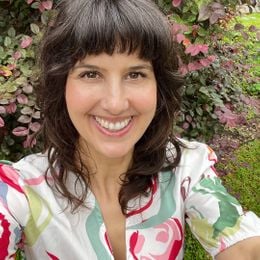
Saba Khonsari is a freelance writer based in Houston, Texas. Her work has been featured in online publications, including Texas Monthly, Texas Highways and Business Insider.