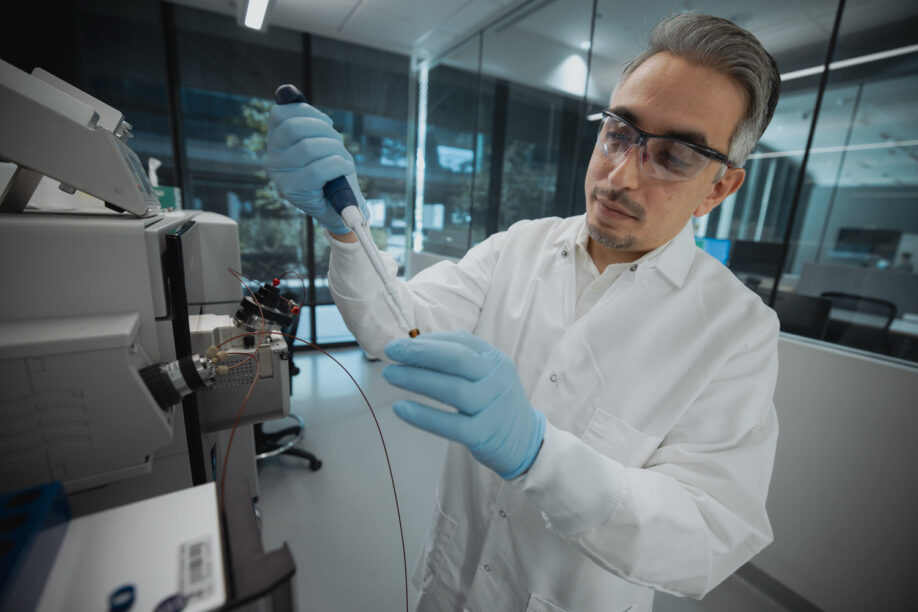
A database of lysosomal proteins is already guiding researchers in studying how brain cells’ waste and recycling systems work – or don’t – in Alzheimer’s and other neurological diseases.
Functioning brain cells need a functioning system for picking up the trash and sorting the recycling. But when the cellular sanitation machines responsible for those tasks, called lysosomes, break down or get overwhelmed, it can increase the risk of Alzheimer’s, Parkinson’s, and other neurological disorders.
“Lysosomal function is essential for brain health, and mutations in lysosomal genes are risk factors for neurodegenerative diseases,” said Monther Abu-Remaileh, a Wu Tsai Neuro affiliate and an assistant professor of chemical engineering in the Stanford School of Engineering and an assistant professor of genetics in the Stanford School of Medicine.
Read more: Stanford Report