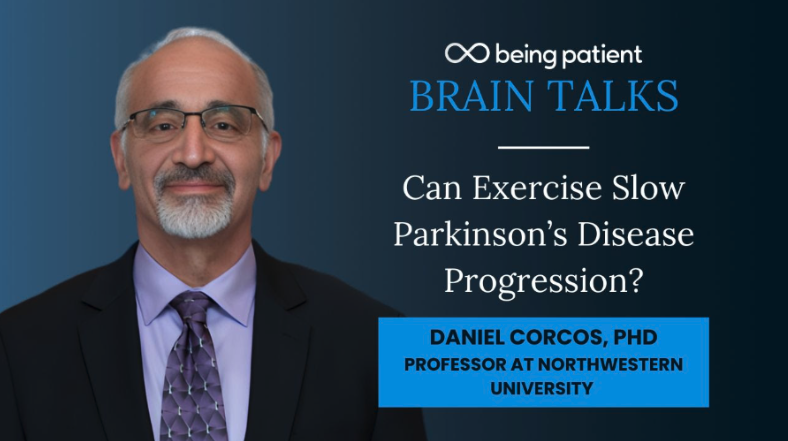
Exercise is not just beneficial for people with Parkinson’s disease—it’s essential medicine. In early February 2026, Dr. Daniel Corcos, a Northwestern University professor of physical therapy and human movement sciences, shared insights about exercise and Parkinson’s in an interview with Being Patient. His message: exercise provides both immediate day-to-day benefits (improved mood, concentration, symptom management) and long-term benefits (slowing disease progression), making it one of the most powerful tools available to people with Parkinson’s.
Dr. Corcos is leading SPARX 3, a major clinical trial testing whether high-intensity aerobic exercise can slow Parkinson’s progression. Results are expected in 2029, but current evidence already shows that people who exercise regularly have slower disease progression.
The Four-Part Exercise Prescription
Research since the early 1990s has clearly shown what works for people with Parkinson’s:
1. Cardio/Aerobic Exercise (Heart and Lungs)
4 times per week, 30 minutes at 80-85% of peak heart rate
- Warm up 5 minutes
- Exercise at target heart rate 30 minutes
- Cool down 5 minutes
- Use a heart rate monitor to track
- Any activity works: treadmill, biking, walking, elliptical
Why it matters: Cumulative evidence from four studies shows high probability of slowing disease progression, especially valuable for young-onset Parkinson’s.
Calculate your target: 220 minus your age = peak heart rate, then aim for 80-85% of that number.
2. Resistance Training (Weight Lifting): Prevents osteoporosis and frailty. Clear data shows it improves cognition.
3. Flexibility Training: Reduces morning stiffness and helps with getting going in the morning.
4. Neuromotor Training (Balance Exercises): Activities like dance or boxing (best done with supervision). Puts your body in positions where balance is tested, helping you improve and reducing fall risk.
Start Where You Are
If you’re younger and newly diagnosed: Prioritize high-intensity cardio to slow disease progression.
If you’re falling or freezing: Focus on balance training with a physical therapist. Try Rock Steady Boxing.
If you’re older or having trouble with daily activities: Work with a PT on functional exercises to maintain activities of daily living.
The answer to “what’s best?” is always: it depends on your individual situation.
Don’t Delay Your Medication
Current guidelines from the American Academy of Neurology: take your dopaminergic medication (Sinemet® in US, Madopar® in Europe).
Medication helps you exercise better and maintain an active lifestyle. Think of it as enabling exercise.
Special Considerations
If You Have Autonomic Dysfunction
Some people with Parkinson’s have reduced peak heart rate (chronotropic incompetence). You still get full benefits if you exercise at 85% of your reduced peak heart rate.
Why Exercise is Especially Powerful for Parkinson’s
Exercise mobilizes dopamine from within (endogenous use). Parkinson’s is a disease almost tailor-made to get extra benefit from exercise.
When you exercise at a high heart rate, you pump blood to the brain. Every decade we age, we get less blood to the brain—less blood means fewer nutrients to neurons. Evidence shows dopamine uptake in neurons is better after high-intensity exercise.
Two Types of Benefits
Long-Term Benefits: Slowing disease progression over years. The earlier you start, the greater the cumulative benefit. If you have the disease for 10 years, you get 10 years of benefit.
Acute Day-to-Day Benefits: Improved mood, concentration, focus, symptom control. Some people notice if they skip 2-3 days of exercise, they get cranky and lose patience.
Not everyone gets the same effect—different biomarkers respond differently—but many people experience significant daily benefits.
The SPARX 3 Clinical Trial
Dr. Corcos is testing whether high-intensity aerobic exercise slows Parkinson’s progression in newly diagnosed people not yet on medication.
370 participants:
- 185 at 60-65% peak heart rate (moderate)
- 185 at 80-85% peak heart rate (high intensity)
- Study runs 2 years
- Results expected in New England Journal of Medicine in 2029
Why drug-naive participants? To see how exercise affects Parkinson’s without the confounding variable of medication.
Important Cautions
More is NOT always better. You need to:
- Calibrate
- Titrate
- Listen to your body
- Rest (rest is really important)
Find the right balance for you.
The Bottom Line
Just because you have Parkinson’s doesn’t mean you can’t be healthy. Approach your diagnosis with informed optimism. Exercise is within your control—you can start today.
People who view exercise as medicine do better. People who stay home and don’t socialize or stay active don’t do as well.
Remember: maintaining your health span is good for you, your family, and your friends. Every person with Parkinson’s affects 10-30 people around them.
Resources
The recording of the interview is posted Being Patient YouTube channel
For more information on the impact exercise has on PD symptoms or for a list of live virtual exercise classes, visit the Stanford Parkinson’s Community Outreach website:
Benefits of Exercise for Parkinson’s Disease
Online PD Exercise Classes
If you are lucky enough to live in Northern or Central California, visit our list of in-person PD exercise classes:
Research Papers
Exercise Prescription Paper:
Corcos DM, LaMotte G, Luthra NS, McKee KE. Advice to people with Parkinson’s in my clinic: exercise. J Parkinsons Dis. 2024;14(3):609-617.
Keep reading for detailed notes from the interview,
Elizabeth
“Can Exercise Slow Parkinson’s Disease Progression?”
Speaker: Daniel Corcos, PhD, researcher and professor of physical therapy and human movement sciences, Northwestern University
Webinar Host: Being Patient (beingpatient.com/)
Moderator: Deborah Kan, CEO, Being Patient
Event Date: February 6, 2026
Summary by: Elizabeth Wong, Stanford Parkinson’s Community Outreach
Question: Let’s start with the basics, what does it mean to get exercise and have Parkinson’s?
Answer: First of all, it’s very important to get an accurate diagnosis. For Parkinson’s disease, the specialists who see people with Parkinson’s are movement disorder specialists. Several other diseases can look similar to Parkinson’s at the beginning. People often have essential tremor—sometimes one can have both Parkinson’s disease and essential tremor. Make sure you’ve been accurately diagnosed and can be reasonably confident in it. There is no definitive diagnosis for Parkinson’s while you are alive, but you want to be as certain as possible.
We’ve been studying exercise in Parkinson’s disease since the early 1990s. We know very clearly what is good for people with Parkinson’s and why it is good. Our exercise prescription has four parts:
Part 1: Cardio/Aerobic/Endurance Exercise (Heart and Lungs): Exercise four times a week for about 30 minutes with heart rate elevated to 80-85% of peak heart rate. Warm up for a few minutes, exercise at target heart rate, then cool down for a few minutes. This is especially valuable for people with young-onset Parkinson’s because the younger you are, the longer you navigate the disease. There is cumulative evidence from four studies showing that if you exercise like this, there’s a high probability you will slow the rate of your disease progression.
Part 2: Resistance Exercise (Weight Lifting): This is very good for osteoporosis and preventing frailty. Clear data shows it improves cognition. It’s very important.
Part 3: Flexibility Training: Many people wake up in the morning feeling stiff—some a little, some a lot. Getting going in the morning is hard. Flexibility exercises are very good for stiffness.
Part 4: Neuromotor Training (Balance Exercises): As the disease progresses, the probability of falling increases. The probability of hesitating when initiating gait increases. The probability of freezing gait increases. Neuromotor training is essentially balance exercises and agility training. These are best done under supervision so someone can show you what to do. Activities like dancing are very good. The idea is to put your body in a position where your balance is tested, which helps you improve.
Question: Is the exercise benefit associated with dopamine signaling or motor circuits? What do we know specifically about why exercise is good, especially at that earlier stage, in terms of the biological mechanisms?
Answer: The precise underlying mechanisms are still being elucidated. My view is when you’re exercising at a high heart rate, you’re pumping a lot of blood through the system. The blood goes to the brain. Every decade we age, we get less blood to the brain. Less blood means fewer nutrients to neurons, which means neurons don’t work as well. There is evidence that dopamine uptake in neurons is better after high-intensity exercise.
Question: You’re conducting a phase 3 trial right now, and you mentioned several other trials on exercise and Parkinson’s. Clinically, what differences do you see between patients who exercise regularly and those who don’t?
Answer: Most of my colleagues who see patients daily say that patients who exercise and live a healthy lifestyle are doing much better. I’m a PhD, but I spend a lot of time with people with the disease. Many studies have looked at the epidemiology of how disease progresses and compared people who exercise with healthy lifestyles—rates of progression are slower.
For the monthly virtual group I am involved with, those people who view exercise as medicine, do better. People who stay at home all the time, who don’t go out and socialize and move and stay active with people, just don’t do as well.
It’s important to realize the benefits of exercise do not apply to Parkinson’s disease specifically. Exercise is beneficial across the spectrum of diseases—from Alzheimer’s to people who’ve had a stroke, to people with metabolic syndrome or diabetes. The essential message is the same.
The special thing about Parkinson’s disease is that exercise mobilizes dopamine from within—the endogenous use of dopamine. Therefore, Parkinson’s is a disease almost tailor-made to get extra benefit from exercise.
Question: You mentioned earlier it’s especially beneficial for people with early-onset Parkinson’s. Is that because exercise can actually change the disease process itself? Or is it helping the brain compensate for damage? What do we know about the relationship with the disease—is it cause and effect?
Answer: The reason I stress early onset is: if you have the disease for ten years, you get a ten-year benefit from exercise. For example, Michael J. Fox—he was 29 when diagnosed. He’s had the disease for forty years, so in a sense he is getting four times the benefit from exercise. But that’s just because he has had the disease four times as long. The earlier you get the disease, the greater the benefit exercise has over your life.
I try to help people understand that just because you have Parkinson’s disease, it doesn’t mean you can’t be healthy. There’s nothing about having Parkinson’s that stops you from leading a relatively normal healthy lifestyle. I’m aware some of you may be in your eighties or at stage 3-4, and life can get very complicated. I want to put out a message of informed optimism, especially for those newly diagnosed. Much of what you read and hear can be pessimistic. I think the way to approach the disease is with informed optimism.
Question: Have there been studies separating Lewy body dementia from Parkinson’s in terms of exercise research, given their close relationship?
Answer: Not that I’m aware of. Fewer people have Lewy body dementia, so the relative percentage is noticeably lower. I think the same general principles will apply.
When you get into cognition, what’s really important to know is it requires multimodal lifestyle changes. If you have Parkinson’s and tremor, you turn on your stimulator and get an instant reduction in tremor—it takes about six seconds. There is no dramatic treatment for cognition. Some medications may have an effect, but not to the extent that you suddenly get your cognition back.
Treatments for cognition have to be over decades. You have to be doing all the right things. It’s true that a very large percentage of people with Parkinson’s develop dementia by the end of the disease. But for many decades we didn’t have the knowledge we have now. My view is that it’s not a foregone conclusion you’ll go from mild cognitive impairment (MCI) to dementia.
In the case of Lewy body syndrome, the trajectory may or may not be alterable. But in Parkinson’s disease, several studies show you can improve cognition. You can take people classified as mild cognitive impairment (MCI) and improve their cognitive scores. Cognition is the clear example where large lifestyle changes lead to big differences.
It doesn’t take much of a drop in cognition for people to no longer be able to live alone. If you can delay by just a small amount the decline each year, the overall effect is huge.
Moderator comment: Aim for a good lifestyle for prevention. It applies to all dementias. Once you go down the track of neurodegeneration, it becomes harder to reverse—in many cases you can’t. Interfering early with lifestyle makes a lot of sense.
Question from an audience member (62YO with a peak heart rate of 120 bpm): Should I start Modapar® [available in Europe] to be able to exercise more? Is there a minimum heartbeat rate people should be striving for? If they’re not achieving that, what’s the solution?
Answer: There’s a group of people with Parkinson’s who have autonomic dysfunction, and the autonomic dysfunction causes a reduction in peak heart rate. A simple formula is 220 minus age. If you’re 70, your peak heart rate should be about 150. The formula is flawed—doesn’t work for everybody. If you go below 85% of that number, there’s a technical term: chronotropic incompetence, which means blunted heart rate response.
For the audience member with the questions, a 62-year-old with a peak heart rate of 120 is low, so there’s a probability you have chronotropic incompetence. We’ve written a paper about how you can test what your peak heart rate is. But if you have a reduced heart rate like this, you can still get the same benefits. We’ve shown that people whose peak heart rate is low—if they exercise at 85% of their reduced peak heart rate—still get all the benefits. So you’re doing everything right. You’re on the right track. I would not be concerned about your heart rate of 120.
As for medication: In Europe, the standard drug is Madopar® (levodopa/benserazide). In America, it’s Sinemet® (carbidopa/levodopa). The difference isn’t important for this conversation.
Going on dopaminergic therapy is now thought of as good. There used to be an idea about trying to delay it. For those of us who try to avoid drugs as often as possible, there’s the thought “maybe I can get away with it.” Current guidelines from the American Academy of Neurology and experience with patients say: take your dopaminergic medication.
One way to look at medication is as a way to enable exercise. For people who love to run, if you develop running-induced dystonia (a real aggravation for young people), one way to deal with that is extra medication. Madopar® happens to be particularly effective. Medication is good.
Question from audience member: Is there a specific exercise that’s more beneficial than others? Between running, walking, weightlifting, yoga—have different types of exercise been studied in terms of benefits for people with Parkinson’s?
Answer: It’s a little like asking: is French cuisine better for you than Greek cuisine or Italian cuisine? I’m not convinced that’s the best question. You have to start with yourself.
If you’re younger onset, not falling, not freezing: Put time into slowing disease progression with high-intensity cardio. One thing I’m always told is “you’ve got all these things to do, there are only so many hours in the day, I’m a very busy person.”
If you’re falling: Focus heavily on neuromotor training. Find a physical therapist. Try Rock Steady Boxing. There are a lot of boxing programs in America. If you have balance or agility problems, put more time on that.
If you’re noticeably older or having trouble getting out of a chair: Do exercises to maintain everyday activities of daily living. Work closely with a physical therapist.
The classic answer to all questions is: it depends. It really depends on your individual situation.
Question: Let’s talk about the trial you’re running. It’s phase 3, called SPARX 3, testing whether high-intensity aerobic exercise can slow Parkinson’s progression, particularly in people newly diagnosed and not on medication. Is that correct?
Answer: Correct.
Question: How many people are in this trial? Do you have early insights? What will we learn once you’ve completed this study?
Answer: We will randomize 370 people:
- 185 at 60-65% peak heart rate (moderate intensity)
- 185 at 80-85% peak heart rate (high intensity)
The study runs over two years. We expect to show that the group exercising at high heart rate (80-85%) will have slower disease progression.
We’ll measure the difference using the Movement Disorder Society Unified Parkinson’s Disease Rating Scale (MDS-UPDRS)—the moderate intensity group will have a higher (worse) number.
We also have a dopamine transporter (DAT) scan that looks at how dopamine binds in different parts of the brain. We expect binding potential to be higher in the group that exercised at 80-85%.
We are looking at drug-naive participants because we want to look at disease progression in the absence of drugs. We want to see how exercise affects Parkinson’s without the confounding variable of medication. Studies on disease progression should always be on people who haven’t taken medication yet. Otherwise, you don’t know whether it’s the new treatment or the medication altering disease progression. SPARX 2, published in 2018, was also on drug-naive people and was very informative.
Question: When will we have results? I’m assuming you’re not recruiting anymore?
Answer: We’re recruiting vigorously. We expect to publish in the New England Journal of Medicine in 2029. It’s important to publish results of big clinical trials whether positive or negative. If it’s negative, we need to know so we can try to look somewhere else or understand why. Burying negative trials is not good.
Question: What exactly is the rigorous exercise that participants are undertaking?
Answer: They’re all on treadmills—that was intentional. For those exercising outside the study, it doesn’t have to be a treadmill. It can be biking, walking, ellipticals— whatever you want.
Heart rate is tightly controlled with heart rate monitors:
- 5 minutes warm-up
- 30 minutes at 80-85% (precisely measured)
- 5 minutes cool-down (precisely measured)
We also monitor people’s activity for a whole week every three months. We’re interested in three possibilities:
- Overall activity level doesn’t change
- You’re fitter, so you go out and do more (we saw a lot of this in SPARX 2—people in Colorado got back to hiking)
- You’re so tired from exercise that you hit the couch, and overall activity drops
It’s important to think of exercise from two separate points of view: long-term benefits over the course of life and acute exercise effects such as day to day benefits. Not everybody gets the same effect. We’re going to be looking at this in SPARX 3. There’s something about different biomarkers in the blood that may respond differently for some people. Not everybody gets that “endorphin high.”
If you struggle with exercise, think of:
- Benefits you get day-to-day
- Benefits you’ll get in three months or three years
- If neither works: the better your physical function and cognition, the better it is for people around you
When I write grants, I can say there are more than a million people with Parkinson’s in America. But I don’t. I make the case that every person with Parkinson’s probably has family and friends of 10-20-30 people, all affected in some way. Anything you can do to maintain your health span (the period of time a person spends in good health) is really good for you, your family, and your friends.
Some of you occasionally do a little too much. With exercise, it is NOT the case that more and is good.
You need to:
- Calibrate
- Titrate
- Listen to your body
- Rest (rest is really important)
Find the right balance for you.
Moderator comment: Exercise is within everyone’s control. You can just start—you’re not waiting for drug approval or anything. Hopefully this will inspire people to get out there and get moving.