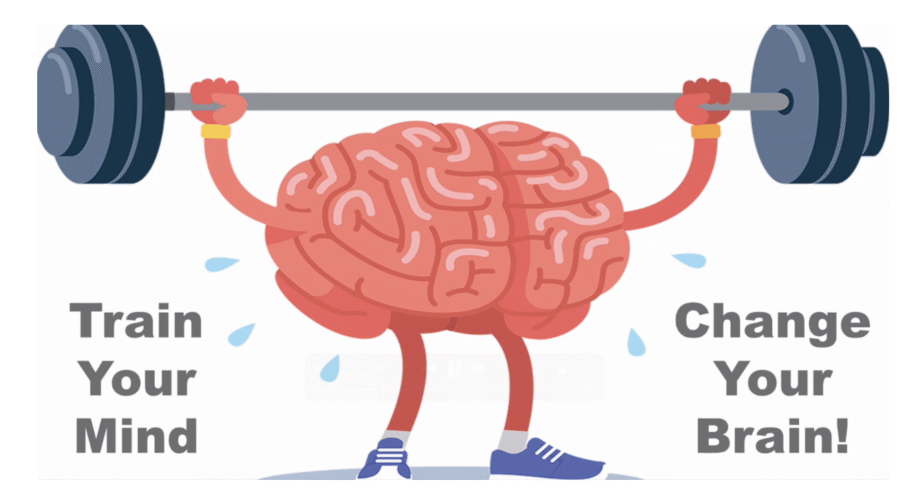
For decades, scientists believed brain structure was fixed after childhood, but imaging and research has shown something that our brains continue to change and adapt well into adulthood. This shift from a “fixed brain” to a “plastic brain” model has changed what we know about brain health and Parkinson’s disease.
On February 11, 2026, Jenny Yopp presented “The Power of Neuroplasticity & Exercise to Improve Movement in Parkinson’s” for the Parkinson Association of the Carolinas. Her core message: Through consistent, challenging exercise—especially when combined with cognitive tasks—people with Parkinson’s can build new neurons, strengthen neural connections, and improve both motor and non-motor symptoms. Change isn’t just possible, it’s within your control.
Jenny brings impressive credentials: exercise science background, 18 years as a college basketball coach, personal fitness trainer, Rock Steady Boxing coach, functional medicine nutritionist, and certified brain trainer. Her coaching energy shines through with practical wisdom from decades helping people achieve their physical and cognitive potential.
What is Neuroplasticity?
Neuroplasticity is your brain’s ability to reorganize, remap its structure, functions, and connections in response to stimulus. Think of it this way: when you walk through a forest taking the same path every day, that path becomes more defined and easier to follow. Similarly, when you repeat certain thoughts or behaviors, you create well-worn pathways in your brain. The exciting part? You can always create new paths.
Two Types of Neuroplasticity
Structural Plasticity: Physical changes like growth of new neurons or formation of new synapses
Functional Plasticity: The brain’s ability to move functions from damaged areas to undamaged areas
Neuroplasticity works both ways: Negative thinking and behaviors reinforce certain pathways, but when you replace negative habits with positive ones, new pathways take over, helping you become more mentally strong and adaptable.
The Principles That Make Neuroplasticity Work
For your brain to change effectively, activities should have these characteristics:
1. Meaningful and Fun
Your brain needs to feel motivated to learn. When it’s fun, your brain wants to learn it more. Having real-life meaning or purpose has a big impact.
2. Easy to Learn, Hard to Master
Example: You learned A to Z as a child. Learning Z to A backwards would be easy to learn but very difficult to master. This challenge is what drives brain growth.
3. Novel (New)
New information, a new chord on a musical instrument, a new language. Take it slow, do it in increments, repeat it over and over—your brain will benefit.
4. Specificity Matters
If you want to become a better piano player, you have to specifically practice piano. The nature of training dictates the nature of growth.
5. Repetition and Intensity
We learn in chunks as adults. Repetition is essential. The activity needs to be challenging—somewhat agitating to the brain—something you have to work hard on.
6. Hope and Self-Efficacy
This is critical. Your psychology, self-efficacy, and hope matter deeply to neuroplasticity. The brain is more willing to grow better connections, grow new neurons, and flood itself with positive neurochemicals when you have hope.
7. Sleep for Consolidation (CRITICAL)
This is when neuroplasticity actually happens. After 5-6 days or weeks of practicing piano or Rock Steady Boxing or cycling harder and faster, deep restorative sleep is when it suddenly kicks in—when the brain consolidates all that practice. Without good sleep, neuroplasticity can’t fully happen. (Note: Insomnia is a common Parkinson’s symptom—tackle this with a sleep doctor if needed.)
8. Volume and Frequency
At least 150 minutes per week of exercise. Practice volume and frequency are super important.
The Best Exercise is Whatever You’ll Do Consistently
Break a sweat. Every drip of sweat—even if you don’t perspire much—means you’re getting your heart rate up and increasing blood flow to the brain.
Exercise Prescription
High-intensity exercise in intervals (get heart rate up, pull it down, repeat) has the biggest impact:
- Aerobic exercise
- Strength training
- Balance work
- Flexibility
- Respiratory health
All ages and all stages of Parkinson’s can benefit from exercise.
Dual Tasking: The Secret Weapon for Neuroplasticity
Dual tasking means training your brain cognitively while moving your body physically at the same time. This has an immediate impact on the brain, flooding it with positive dopamine, serotonin, and noradrenaline.
Simple Dual Tasking Examples
- Walk while listening to a complicated podcast
- Ride a stationary bike while doing trivia
- Do water aerobics while counting backwards from 100 by 2s, then by 3s
- Read while sitting on a recumbent bike
- Stand on one foot while doing a cognitive challenge
- Practice hand games (pointing with one hand, thumbs up with other, then switch)
What Dual Tasking Improves
- Executive function and planning
- Decision making and task initiation
- Impulse control and emotional control
- Cognitive flexibility
- Self-monitoring and problem solving
- Working memory
Top Exercise Programs for Parkinson’s
Rock Steady Boxing
Of all vigorous exercises, boxing is at the top for Parkinson’s. Rock Steady Boxing has been around almost 20 years with 800 worldwide affiliates.
Benefits:
- Increases quality of life
- Combats unilateral symptoms
- Decreases fall risk
- Increases respiratory strength
- High-intensity aerobic exercise
- Builds strength and balance
- Incredible social and community experience
- Super fun
How it works: You don’t box another person—it’s fitness and community. Classes go 5-8 minutes longer than you think because we need to fight and push that much when living with Parkinson’s.
Other Excellent Programs
LSVT BIG and LOUD: Teaches doing everything in life BIG physically and LOUD vocally
Yoga: Helps with posture, blood flow, flexibility, strength; works both sides of body
Tai Chi: Helps with posture, balance, strength
Dance: Move your body safely to music you enjoy
Cycling: Very vigorous exercise, indoors or outdoors
Climbing (UpEnding Parkinson’s): High-intensity intervals, balance, leg strength, aerobic exercise, flexibility, social connection. For all ages and stages.
Racket/Paddle Sports: Pickleball, tennis, ping pong—may be one of the best activities for dual tasking because you strategize while moving
Simple Ways to Build Neuroplasticity Daily
Mix It Up – Try New Things
- Write with your non-dominant hand
- Brush teeth or comb hair with non-dominant hand
- Take different walking routes
- Drive different routes and notice landmarks
- Learn a new chord, word, or language
- Listen to music in a genre you don’t normally choose
- Cook new recipes
- Switch up your environment
Mental Exercises
- Say alphabet backwards
- Mental rotation exercises
- Pattern recalls
- Working memory drills
- Recall something from your day without checking your phone
- Practice focusing on one object for 60 seconds while moving
These small micro skills matter. They ask your brain to try something you’ve been doing all your life in a different way—critical for building new neural pathways.
The Timeline: When to Expect Results
With consistent practice (150+ minutes/week), challenging activities, good sleep, and the right attitude, you should see significant improvements within 4-6 weeks.
Real examples from Rock Steady Boxing participants (unsolicited reports):
- Tremor decreased within 4-6 weeks
- Time needed to use a walker decreased within 4-6 weeks
It’s unique to your brain, but be optimistic that it’ll happen sooner than years later.
The Six Pillars of Brain Health
All these lifestyle behaviors work together—they’re not in a hierarchy, they’re all important:
- Connect – Social engagement and community
- Deep Sleep – Restorative, quality sleep
- Nourish – Proper nutrition
- Move – Physical exercise
- Mindfulness – Manage stress (unmanaged stress suppresses neuroplasticity)
- Discover – New, interesting, fun, challenging activities
The Bottom Line
Our brains are amazing. Even with Parkinson’s disease, your brain has the chance to grow and improve—to improve memory, focus, attention, and working memory. The brain can reorganize itself.
But the brain must be challenged and engaged.
Fight back against Parkinson’s disease. You can fight back with proactive effort, particularly in movement.
Key Requirements
- Find something meaningful to you
- Repeat it and stay with it
- Know you’re going to get better
- Get deep, restorative sleep
- Keep blood flowing to the brain
- Take time for recovery
- Let medication support you (stay on consistent schedule)
- Pay close attention to medication timing
Dual tasking takes it to another level. Challenge your brain while moving your body.
Resources
Parkinson Association of the Carolinas Webinar Recording
https://www.youtube.com/watch?v=h5P9CkC8p5U
Benefits of Exercise for Parkinson’s Disease
https://med.stanford.edu/parkinsons/exercise-therapies/exercise.html
Online Parkinson’s Disease Exercise Classes
https://med.stanford.edu/parkinsons/exercise-therapies/live-exercise-classes.html
In-Person PD Exercise Classes (Northern/Central California)
https://med.stanford.edu/parkinsons/northern-california-resources/exercise-classes.html
SmartFit User Directory
https://smartfitinc.com/users-directory/
UpEnding Parkinson’s Locations
https://upendingparkinsons.org/locations
Note: My notes exclude information on The Ivey, a Charlotte, NC-based exercise and respite club with Parkinson’s-specific programs. I’ve focused on the universal topics of neuroplasticity and exercise.
– Elizabeth
“The Power of Neuroplasticity & Exercise to Improve Movement in Parkinson’s”
Speaker: Jenny Yopp, director of strategic initiatives, The Ivey (theivey.com), Charlotte, NC
Webinar Host: Parkinson Association of the Carolinas (PAC)
Moderator: Jillian Schultz, program director, PAC (parkinsonassociation.org/)
Webinar Date: February 11, 2026
Summary by: Elizabeth Wong, Stanford Parkinson’s Community Outreach
What is Neuroplasticity? Neuroplasticity is the brain’s ability to reorganize, remap its structure, functions, and connections in response to a stimulus.
Core Principle: When we train our brain, we can change our brain. For decades, scientists believed brain structure was fixed after childhood. Functional imaging and newer research has shown that our brains continue to change and adapt well into adulthood. This shift from a “fixed brain” to a “plastic brain” model has revolutionized our understanding of brain function and mental health.
Two Types of Neuroplasticity:
- Structural Plasticity – Changes to the brain’s physical structure, such as growth of new neurons or formation of new synapses
- Functional Plasticity – The brain’s ability to move functions from a damaged area to other undamaged areas
Neuroplasticity works both ways: Negative thinking and behaviors reinforce certain pathways, but when you replace negative habits with positive ones, new pathways begin to take over, helping you become more mentally strong and adaptable.
Principles of Neuroplasticity
For neuroplasticity to work effectively, activities should have these characteristics:
- Meaningful Task: The brain needs to feel motivated to learn it, especially if it’s something new. This is individually defined. When it’s fun, the brain wants to learn it more. Having real-life meaning or purpose has a big impact.
- Easy to Learn, Hard to Master: Example: The alphabet. We learned A to Z when we were very young, but learning to go from Z backwards to A would be easy to learn but very difficult to master—it would be very slow in learning.
- Measurable: We want to know that neuroplasticity is actually working. Implement opportunities that give a chance to look at measurements to see how much you’re actually growing and benefiting.
- Novel (New): New information, a new chord on a musical instrument, a new language. These can seem daunting and challenging, but if you take it slow and do it in increments and repeat it over and over, your brain will benefit.
- Specificity: The nature of training dictates the nature of plasticity. If you want to become a better piano player, you have to specifically practice piano. Even if you don’t consider yourself musically inclined, if you put yourself in front of a piano with the right resources (teacher or YouTube video), you can become a piano player. The more you stay with it and get specific, you will improve.
- Repetition: We learn things as adults (living with or without Parkinson’s) in chunks. Repetition is essential for consolidation.
- Intensity: The activity needs to be challenging—somewhat agitating to the brain—and something you have to work hard on.
Hope and Self-Efficacy
Hope and self-efficacy is very important. No matter what life throws at us, no matter what a doctor shares about concerns we have, our self-efficacy and hope matter deeply to neuroplasticity. The brain is more willing and able to grow better connections, grow new neurons, and flood itself with positive neurochemicals (hormones that make us happy) when we have hope.
Blood Supply (Angiogenesis)
We have about 400 miles of blood vessels and capillaries in our brain. We can’t grow new ones (that’s not part of neuroplasticity), but if we get more blood flowing to our brain with good posture, exercise, and fantastic sleep, it absolutely supports neuroplasticity.
Awareness of Impairment
It’s important to understand when we’re assigned a task to try really hard. Effort is a big part of it. Be hopeful, optimistic, and fight back against motor or non-motor symptoms from Parkinson’s.
Sleep for Consolidation (CRITICAL)
When you practice something day after day, deep restorative sleep is when neuroplasticity consolidates—when it truly sets in. Example: After 5-6 days or weeks of practicing piano or Rock Steady Boxing or riding a bicycle harder and faster, it suddenly kicks in because sleep has helped it all consolidate. This is really critical.
(Note: Insomnia can be a symptom of Parkinson’s, and this needs to be tackled as best as possible—sleep goes hand in hand with exercise to make neuroplasticity possible.)
Volume and Frequency: Practice volume and frequency are super important. At least 150 minutes per week of exercise.
Lifestyle Behaviors for Brain Health and Neuroplasticity
All lifestyle behaviors are connected—they’re not in a hierarchy, they’re all important and support neuroplasticity:
- Connect (Social Connection) – Social engagement and community
- Deep Sleep – Restorative, quality sleep
- Nourish – Proper nutrition for brain and body
- Move – Physical exercise and activity
- Mindfulness – Managing stress (if we don’t manage stress, our ability to benefit from neuroplasticity is suppressed, and our immune system goes down)
- Discover – New, interesting, hopefully fun and sometimes complicated activities that you work on consistently
All of these pillars work together to support neuroplasticity and brain health.
Benefits of Exercise for People with Parkinson’s Disease
The research is deep and still moving fast. There are large meta-studies proving how powerful exercise is on neuroplasticity and on the ability to move and manage both motor and non-motor symptoms.
Exercise can:
- Improve coordination, balance, and gait
- Reduce risk of falls
- Combat unilateral symptoms (when motor symptoms show up more on one side of the body than the other)
- Improve hand-eye coordination
- Improve gastric motility (constipation is a common symptom, and exercise can have a huge positive impact)
- Improve mood and sleep
- Help with fatigue and increase energy
- Improve physical coordination
- Build strength, flexibility, and respiratory health
- Increase quality of life
Key Point: The best exercise is whatever you’ll do on a consistent basis. Break a sweat.
Every drip of sweat—even if you don’t perspire much—means you’re getting that heart rate up and increasing blood flow to the brain. It’s like being in a bubble bath of positive neurochemicals. This has a huge impact on health and dealing with symptoms.
Exercise Prescription: At least 150 minutes per week
High-intensity exercise in intervals (get heart rate up, pull it down again, repeat) has the biggest impact. Work on:
- Aerobic exercise
- Strength
- Balance
- Flexibility
- Respiratory health
All ages and all stages of Parkinson’s can benefit from exercise.
Dual tasking is training your brain while you are focused cognitively AND coordinating your attention while doing something physical. It’s moving your body while cognitively challenged at the same time. Dual tasking is a powerful tool for neuroplasticity.
Examples of Dual Tasking:
- Go for a walk while listening to a complicated podcast
- Ride a stationary bike while doing trivia with friends or on your own
- Do water aerobics while counting backwards from 100 by 2s, then by 3s
- Read a book while sitting on a recumbent bike
- Stand on one foot while doing a cognitive challenge
- Practice hand games (demonstrated in webinar: pointing with one hand, thumbs up with the other, then switching)
Dual tasking has an immediate impact on the brain and the ability for neurotransmitters to flood the brain with positive dopamine, serotonin, and noradrenaline. This gives motivation and helps build new neurons and better synapses.
Dual Tasking is Specifically Helpful for:
- Executive function
- Planning and prioritization
- Emotional control
- Decision making and task initiation
- Impulse control
- Cognitive flexibility
- Self-monitoring
- Problem solving
- Working memory
SmartFit (smartfitinc.com/) is a dual tasking gamified neuro-rehabilitation system that simultaneously trains the brain (cognitive) and body (motor) to enhance cognitive function, balance, and mobility. It uses sensor-equipped targets to challenge memory, problem-solving, and decision-making while executing physical exercises.
[Editor comment: From the SmartFit User Directory on their website, it appears that most of the locations that have this system are physical therapy rehab facilities; there does not seem to be any users around Northern or Central California yet https://smartfitinc.com/users-directory/]
How SmartFit Works:
- Gamifies the concept of dual tasking
- Provides opportunity to assess and show markers of improvement
- Uses targets that you hit while also problem-solving
- Can do sit-to-stand exercises while hitting targets and solving problems
- Programs are designed specifically for individuals for precision support
What SmartFit Helps With:
- Planning and prioritization
- Emotional control
- Decision making and task initiation
- Impulse control
- Cognitive flexibility
- Self-monitoring
- Problem solving
- Working memory
Of all vigorous exercises, boxing is at the top for Parkinson’s. Boxing specifically benefits people with Parkinson’s in many ways:
- Increases quality of life
- Combats unilateral symptoms (balancing left and right side strength and coordination)
- Decreases fall risk
- Increases respiratory strength
- Provides high-intensity aerobic exercise
- Builds strength and balance
- Offers incredible social and community experience
- It’s super fun
Rock Steady Boxing is a program specifically designed for people with Parkinson’s. It’s been around for almost 20 years and is worldwide with 800 affiliates.
How Rock Steady Boxing Works: You don’t box another person—it’s fitness and community. You go through exercises, then when you think class is done, you go 5-8 minutes more. You need to fight and push that much when living with Parkinson’s. The symptoms need to be attacked (always safely).
Other Excellent Exercise Programs for Parkinson’s
LSVT BIG and LOUD: Teaches doing everything in life BIG physically and LOUD vocally, has specific adaptations for Parkinson’s.
Power Moves Class: Specific for those living with Parkinson’s.
Yoga: Helps with posture, blood flow, flexibility, strength; works both sides of the body; and it is fantastic for those with Parkinson’s.
Dance: Move your body safely to music you enjoy
Tai Chi: Specifically beneficial for Parkinson’s, it helps with posture, balance, strength
Cycling: Can be done indoors or outdoors and can be very vigorous exercise
Climbing (Up Ending Parkinson’s): Many people in Charlotte participate through Up Ending Parkinson’s. It is for all ages and stages of Parkinson’s. Specific benefits include consistent high-intensity exercise, intervals, balance, leg strength, aerobic exercise, flexibility, social connection. Editor’s comment: you can find a participating gym near you on their website (upendingparkinsons.org/locations)
Racket/Paddle Sports: May be one of the best activities for dual tasking due to the ability to strategize and get to the ball while playing against somebody. Includes sports like pickleball, tennis, ping pong.
Tips and Tools for Building Neuroplasticity
Mix It Up – Try New Things:
- Write with your non-dominant hand
- Comb your hair or brush your teeth with your non-dominant hand
- Try to eat with your non-dominant hand
- Take a different walking route in your neighborhood
- Drive a different route and notice different landmarks
- Learn a new chord on a musical instrument
- Learn a new word in sign language or a new language
- Listen to music in a genre or language you don’t normally choose
- Cook a recipe you’ve never used before
- Switch up your environment
Practice Mental Exercises:
- Say the alphabet backwards
- Mental rotation exercises
- Pattern recalls
- Working memory drills
- Recall something from your day without checking your phone
- Practice focusing attention for 60 seconds on one object while moving (on treadmill, bicycle, etc.)
The ability to actually focus builds focus—this works on neuroplasticity.
Small Micro Skills Matter: Small changes ask the brain to try something you’ve been doing all your life in a different way, which is really important for building new neural pathways.
Our brains are amazing. Even when they have neurological challenges like Parkinson’s disease, the brain has a chance to grow and improve—to improve memory, focus, attention, and working memory. The brain can reorganize or remap itself.
But the brain must be challenged and engaged.
Fight back against Parkinson’s disease. You can fight back with very proactive effort, particularly in the movement realm.
Key Requirements:
- Find something meaningful to you
- Repeat it and stay with it
- Know you’re going to get better
- Get deep, restorative sleep (this is really important)
- Keep blood flowing to the brain
- Take time for recovery
- Let medication support you (stay on a consistent schedule)
- Pay close attention to medication timing
Question and Answer
Question: Does it matter if sleep is natural or using melatonin?
Answer: I am not a doctor. If sleeping is difficult, especially deep REM sleep (with rapid eye movement and dreaming), the first recommendation is to see a sleep doctor. There are fantastic doctors for insomnia. Sometimes a sleep study is needed, or a CPAP may help. If your provider recommends melatonin (since it’s something your body produces naturally), then possibly that’s helpful. Most of the time, look at sleep hygiene first. These have a huge impact on how soon your brain is ready to relax and do its job at night. When was the last time you drank caffeine? When did you start turning off technology?
Question: How long does it take to see improvement when practicing neuroplasticity?
Answer: You need to tackle it with optimism—your attitude is really important. Do it because it’s hard and challenging. Make sure you’re:
- Doing it in chunks
- Sleeping well
- Doing it consistently (not just once or twice a week—you need about 150 minutes a week)
Within a few weeks, you’re going to see significant improvements. Using tools like SmartFit helps because you get objective feedback. Between 4-6 weeks, you should see significant improvements.
At Rock Steady Boxing training in Indianapolis recently, there were about 45 people with Parkinson’s in the first class. Unsolicited, people came up and said within 4-6 weeks:
- Tremor decreased
- Amount of time needed to use a walker decreased
It’s unique to your brain, but find something interesting to you, work on it consistently, do it in chunks of time, sleep really deeply, and follow all the other supporting principles. Be optimistic that it’ll happen sooner than years later.
Question: Is yoga beneficial?
Answer: Any kind of activity is helpful. Number one activity is something you’ll do on a consistent basis. Motor symptoms of Parkinson’s often challenge posture. Yoga and tai chi raise our bodies up. We’re working both sides of our body with yoga. Flexibility is important because aging pulls us down (four times our body weight from gravity). As we go down, we become tight in front muscles and weak in back muscles.
Anything that makes us stronger with our base is important. Some motor challenges include:
- Making sure steps stay big
- Staying on balance
- Reducing fall risk
Getting heart rate up, working on strength, balance, and coordination are really key. Respiratory support is also important. Yoga and tai chi provide many opportunities for all of these.
Question: My husband has had Parkinson’s for 15 years. He goes to a wellness center in the morning and comes back in the afternoon around 4. Should he do exercises in the evening if he’s tired, or should we schedule activities during the weekend when he’s not doing as much?
Answer: It’s hard to say without knowing what he’s doing all day, but it sounds like he’s consistent. At least 150 minutes a week is needed. It needs to be:
- Focused
- Challenging
- Get that heart rate up
- Work on strength and balance
With Rock Steady Boxing, for example, you go through the exercise (not boxing another person—it’s fitness and community). You think you’re done with class, but then you go 5-8 minutes more because we need to fight and push that much. We really need to work hard when living with Parkinson’s. The symptoms need to be attacked (always safely).
Find the right mode of exercise that supports you individually. It’s super important that he’s:
- Very active
- Engaging in the social part
- Working with people who know what they’re doing (experts)
- Really pushing himself (or being pushed) to get more coordinated, stronger, better balanced
This creates a better opportunity to function in day-to-day life. If he’s been living with Parkinson’s for 15 years, he can live another 40 years with the right approach.
Question: How can you find exercises that help with dual movement?
Answer: I’m a YouTube fan—you can search for “dual tasking physical brain health” and there are lots of resources online.
Some examples:
- Water aerobics while counting backwards from 100 by 2s, then by 3s (some cognitive challenge—simple but not easy, hard to master)
- Reading while sitting on a recumbent bike (working cognition while physically moving safely)
- Any combination of cognitive challenge plus physical movement is dual tasking
These are fantastic for brain health and neuroplasticity.