At the Minnesota Spring Parkinson’s Symposium on April 10, 2026, social worker Joan Hlas, MSW, LISW, of Struthers Parkinson’s Center in Minneapolis, Minnesota presented “Caregiving as a Gift and How to Thrive Without a Gift Receipt.” The event was co-hosted by the APDA Minnesota Chapter, the Parkinson’s Foundation Minnesota and Dakotas Chapter, and the University of Minnesota Medical School.
Key Takeaways
Caregiving is unpredictable and progressive — but it can be meaningful. Research shows that care partners often report an increased sense of purpose alongside the well-known stressors. The key to thriving is communication, planning, and self-care — not perfection.
Communication between people with PD and their care partners must be ongoing and evolving. One conversation will never be enough. Talking openly and often about preferences, fears, boundaries, and what is working or not working is essential. When you are feeling anxious or overwhelmed, a simple five-senses mindfulness exercise — focusing briefly on something you can taste, hear, feel, smell, and touch — can help calm your nervous system so you can address challenges more clearly.
Planning ahead reduces crisis and stress. Having a written plan that includes medical wishes, a health care directive, legal and financial planning, medication lists, daily routines, and a list of backup resources means that if an unexpected event occurs, the people around you know how to help. Planning is an act of care, not a loss of hope.
Resources
A recording of this event is available through the ADPA Minnesota Chapter Vimeo
For more information and resources for caregivers and care partners, visit the Stanford Parkinson’s Community Outreach website:
Keep reading for detailed notes, — Elizabeth
Caregiving as a Gift and How to Thrive Without a Gift Receipt
Speaker: Joan Hlas, MSW, LISW, social worker and manager of operations, Struthers Parkinson’s Center in Minneapolis, Minnesota
Webinar Hosts:
- American Parkinson Disease Association (APDA), Minnesota Chapter
- Parkinson’s Foundation, Minnesota and Dakotas Chapter
- University of Minnesota Medical School
Event Date: April 10, 2026
Summary by: Elizabeth Wong, Stanford Parkinson’s Community Outreach
Caregiving as a Gift
Joan Hlas, a social worker with over 20 years at Struthers Parkinson’s Center and a member of what she calls the “sandwich generation” of caregiving — simultaneously supporting her elderly parents and her own teenager — opened by reframing caregiving as a gift. Like an unexpected, sometimes unwanted gift (she used the example of a hand-crocheted pink sweater she received as a child), caregiving comes without warning, is not always welcome, but stays with you and asks to be acknowledged.
The research on caregiving supports this framing. Benefits that caregivers and care partners often report include an increased sense of purpose, deeper connection, and meaning found in the relationship — even alongside significant stress and burnout. The gift is not constant gratitude. It is not perfect. It is not self-sacrifice. It is the reality of a changed relationship and a changed life, and what you choose to do with it.
Who Is a Caregiver?
Caregivers and care partners include spouses, adult children, siblings, friends, neighbors, and paid aides. In the US, 63 million Americans — one in four adults — fill a caregiving role. About 30% are in the “sandwich generation”, supporting both older and younger generations simultaneously.
Importantly, many people living with Parkinson’s are also caregivers — for a spouse with dementia, a parent, or others. The content of this presentation applies to everyone, not just those in traditional caregiver roles.
Family caregiving reduces hospitalization, keeps people at home longer, and lowers health care costs. Care partners are a vital part of the medical team. If you attend a medical appointment and the provider does not acknowledge or speak with you as a care partner, that is worth addressing.
The Unique Challenges of Caregiving in Parkinson’s Disease
Caregivers of people with PD provide an average of 31 hours of unpaid care per week — up to 100 hours per week in some studies. The particular challenges of PD caregiving include:
- Unpredictability: You cannot plan around PD with certainty. Medication timing, bad days, and disease changes make it difficult to commit to events, trips, or plans. This unpredictability is one of the most stressful aspects of PD caregiving.
- Progressive nature: The disease changes over time, and so does the caregiving role. What works today will need to be adjusted tomorrow.
- Role shifts: Spouses, adult children, and friends all experience shifts in their roles and relationships. Independence changes, and navigating those changes together requires ongoing communication.
- Losses: Both the person with PD and those around them experience losses along the way — of roles, abilities, and expectations.
How to Thrive: Three Strategies
1. Communication and Support
Communication cannot happen once and be done. Talking openly and often about preferences, fears, and boundaries is essential — and what works today may not work next year. Be specific about what kind of help you want and what you do not want. When you are overwhelmed, say so. Use “I feel” language. Ask for help — asking for help is not failure, it is sustainability.
Support looks different for everyone. It may be a large family network, one trusted friend, a support group, or connections made through a shared exercise class. If your existing support network is not meeting your needs, look for new connections. Caregiving should be shared, not carried alone.
2. Planning
Planning ahead reduces crisis and stress. A written plan that is accessible to family members and others who might need to step in should include:
- Medical wishes and a current health care directive (review it if it is more than five to seven years old)
- Legal and financial planning
- Medication lists and daily routines
- Housing and future care preferences
- A list of backup resources (home health agencies, contacts, doctors)
Planning is not wishing the disease to get worse faster. It is recognizing that things will change over time and making sure the people around you know how to help. Starting small is fine — the plan will grow as needed.
3. Self-Care and Self-Recognition
Self-care does not have to be perfect. It starts with acknowledging that this is hard, recognizing your limits, and finding small ways to refill your cup. Without taking care of yourself, things will fall apart — caregiver health is patient health.
Good enough caregiving is enough. Perfection is not the goal. Doing the best you can — and being honest with yourself and your care team about what that looks like — is what matters.
Closing Thought
Joan closed with a quote she has used in her work:
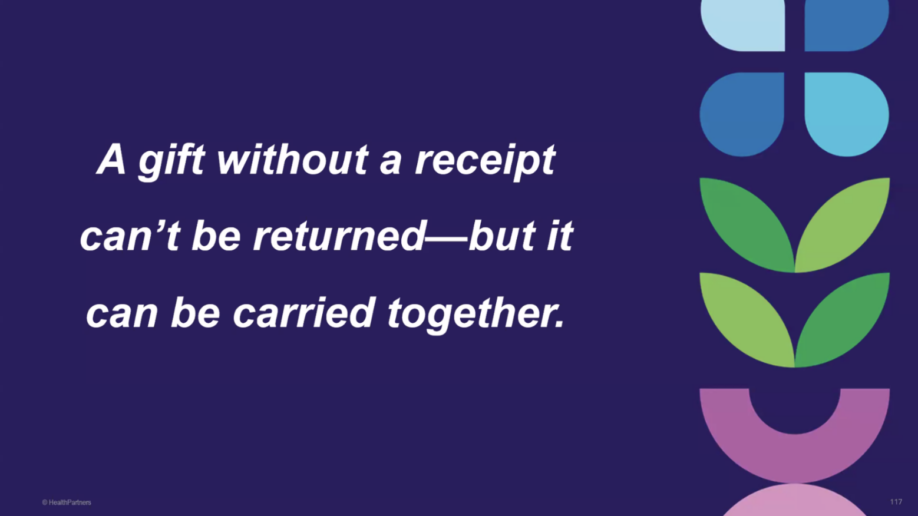
“A gift without a receipt can’t be returned, but it can be carried together.”
The Parkinson’s community — people with PD, caregivers, care partners, friends, and neighbors — can carry this together.