Our office is closed from Wednesday, Dec. 21 through Tuesday, Jan. 3, 2023. We re-open on Wednesday, Jan. 4, 2023. Happy Holidays!

Our office is closed from Wednesday, Dec. 21 through Tuesday, Jan. 3, 2023. We re-open on Wednesday, Jan. 4, 2023. Happy Holidays!
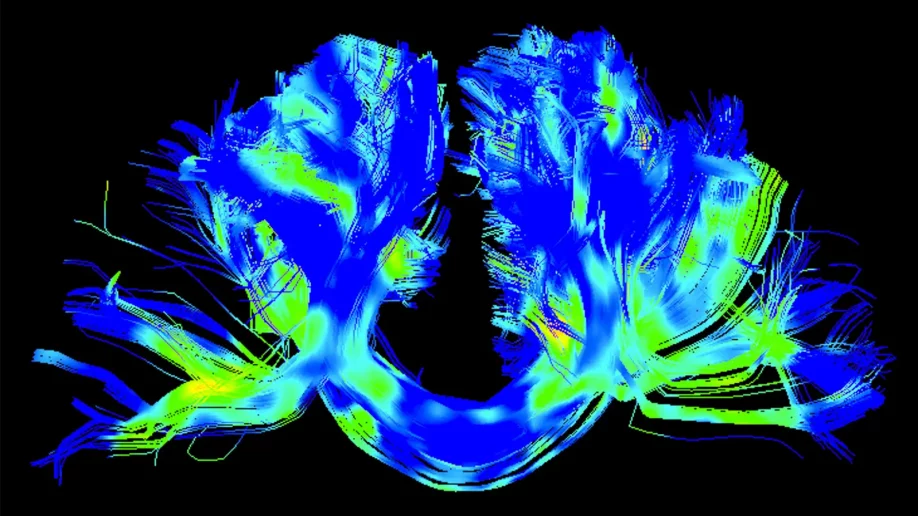
Clusters of Parkinson’s disease cases seen in certain U.S. regions.
The annual incidence of Parkinson’s disease was 50% higher than previous estimates in data from five epidemiological cohorts in the U.S. and Canada.
The new incidence rate was nearly 90,000 cases annually for people 65 and older, reported Allison Willis, MD, of the University of Pennsylvania in Philadelphia, and co-authors
… Full Story>
Excerpt: “In a new surge of research, scientists are now studying which exercises at what level of intensity provide the greatest gains. The goal is to design an exercise prescription — one that will probably include a mix of high-intensity aerobics and balance, strengthening and stretching exercises — that delay the disease’s onset or, ideally, prevent it altogether. They also want to better understand what exercise does to the brain of a person with Parkinson’s, as well as its effects on nonmotor functions such as mood and cognition. To be sure, exercise can’t cure Parkinson’s — there is no cure — but most researchers believe it can make a positive difference for most patients.”
… Full Story>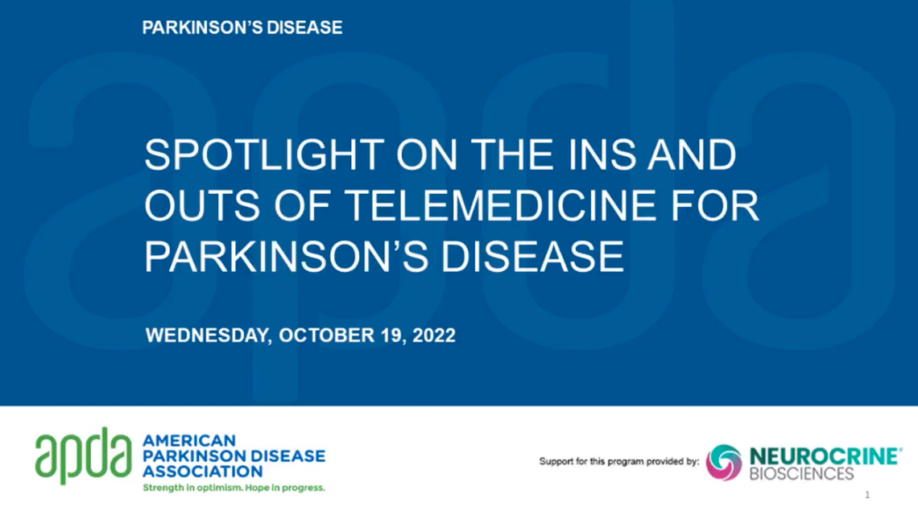
Telemedicine – visiting with your health care provider electronically, using a video conferencing service – was first widely used during the COVID-19 pandemic because people still needed to meet with their doctors but were advised to stay at home and limit in-person interactions. It turns out that PD is well-suited for telemedicine. But now that in-person appointments are available, when should you use virtual visits? This topic is addressed in an upcoming webinar hosted by the American Parkinson Disease Association (APDA).
… Full Story>
From the American Parkinson Disease Association, Northwest Chapter (APDA NW), Tuesday, September 20:
This Thursday, September 22, the Parkinson’s community will come together for a National Day of Action to educate Congress about The National Plan to End Parkinson’s Act and encourage senators and representatives to sign their respective chamber’s bill as co-sponsor.
… Full Story>